Clean Core Factory

Request Live Demo

Clean Core Factory.
Your companion for the Clean Core journey.

Clean Core has evolved from a buzzword into a real priority within the SAP community. Today, companies clearly see the challenge: if legacy systems and custom code aren’t addressed, upgrades become more complex, costs increase, and innovation slows down – especially in the era of cloud applications and AI.

Many organizations want to take the next step in innovation but are still carrying the weight of 10 to 15 years of custom code. This makes upgrades expensive and slows down change. That’s where the Clean Core Factory comes in. It brings structure to complex custom-code landscapes, creates transparency, and enables clear decisions on what should be retained, modernized, or replaced. As a result, costs and upgrade risks decrease while creating space for innovation and new applications on SAP BTP.

How does it work? With a modular and smart setup that analyzes and gradually replaces custom code step by step.
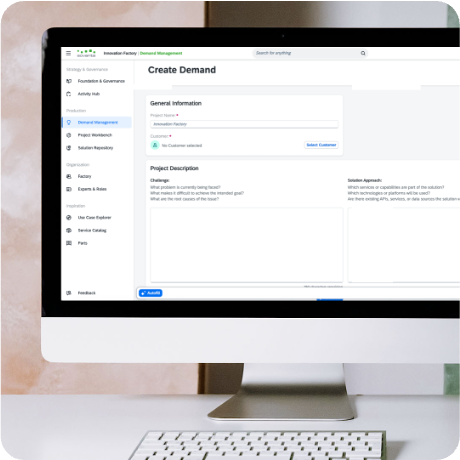
Demand Management
Filter the noise. Provides transparency into the custom code backlog, enables structured intake of new business requirements, and groups similar use cases.

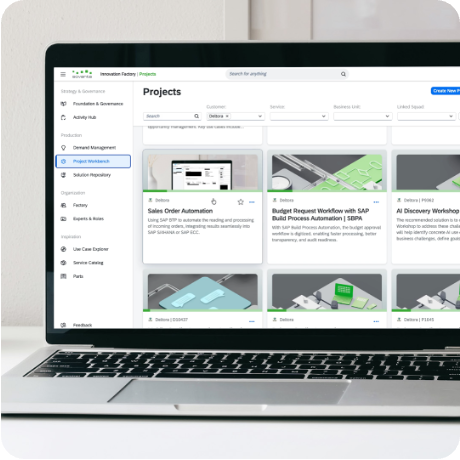
Project Workbench

Accelerate delivery. Combines code scan and technical debt analysis tools with standardized templates for CAP, RAP, and on-stack extensions and workflows.

Solution Repository

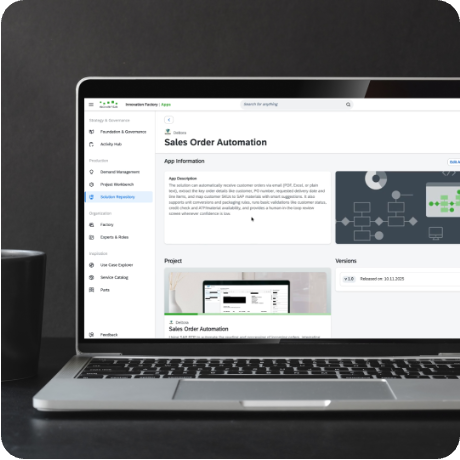
Build for the future. Creates transparency across already implemented Clean Core-compliant solutions.

Stragegy & Governance

Guaranteed compliance. Establishes clean-core guidelines and policies to consistently avoid new core modifications.

Make the Clean Core real — and keep it real over time

How “clean” is our SAP system? What happens to our custom code? Why are upgrades and changes so slow and expensive? These are questions we hear from customers again and again. Here are three typical situations:

S/4 Transformation

Too much custom code and a healthy respect for upgrades? Then it’s time for a structured way forward.

Upgrade Pains

Recurring costs for adaptations, rework, and maintenance? The solution is to get rid of legacy burdens and keep the core clean and stable.

BTP CoE Roadmap

You want to leverage the value of SAP BTP but lack the right structure? Clean Core becomes a key building block – defining guardrails, governance, and a real pipeline for innovation.

Our goal is to provide a solution that meaningfully supports the entire end-to-end use case lifecycle. That’s exactly why we have developed our platform – the Innovation Factory – continuously over many years.
Christian Heinrich
Chief Solutions Officer, sovanta

An exklusive look into the Clean Core Factory

The Clean Core Factory covers strategy, governance, demand management, custom code analysis, and adoption. Building on this, we’ve developed a tailored toolset that supports and accelerates every phase. Discover the Clean Core Factory.

Before moving into implementation, we work together to clarify requirements and pain points -and make tangible what Clean Core actually means for stakeholders and users.
Our tooling supports the entire process and provides clear structure: from defining the target vision and conducting the technical analysis to establishing the target architecture and governance – everything is clearly defined from the very beginning.
At the beginning of every project, we focus on two key questions: How are decisions made? And how do we handle new requirements? This is exactly where the principle of “Keep the Core Clean” comes into play.
The results of your ATC check can be imported directly into the Factory and consolidated into a transparent custom code backlog.
Supported by the Factory, we decide whether developments should be retired, retained, remediated, or replatformed – following the principle: retire, retain, remediate, or replatform.

Would you like to learn more about the Clean Core Factory?

What services are available? What does the licensing model look like? How can the Clean Core Factory be perfectly tailored to your specific challenge? Let’s talk.